
26 August 2026
Einzahlungsschein to QR-Rechnung: What's Changed
The Swiss Einzahlungsschein is gone. Learn about the QR-Rechnung's impact on artisans and SMEs: requirements, VAT updates, payment processing, and efficiency gains.
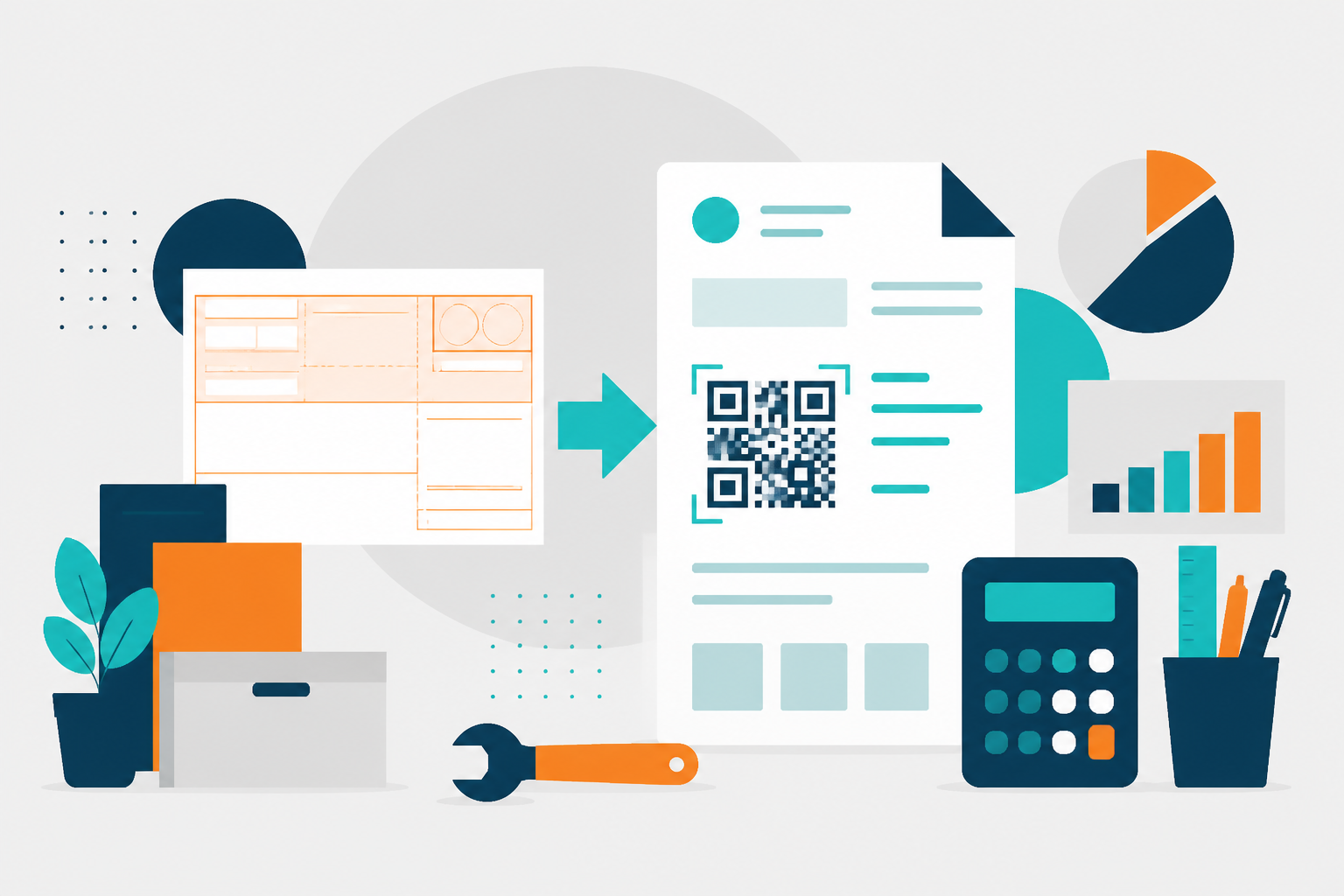
From Einzahlungsschein to QR-Rechnung: The Swiss Payment Evolution
If you run a craft business in Ticino or anywhere else in Switzerland, you'll remember the familiar orange and red Einzahlungsscheine. Until September 30, 2022, these were the standard for most transactions. Preparing an invoice meant ordering these forms, filling them out manually, and hoping the optical reading wouldn't cause issues. The orange ones, with the ESR reference number, were particularly crucial for structured payments. However, manual data entry and reading errors made the process slow and prone to inaccuracies. The decision by SIX and PostFinance to definitively retire this system made the transition to the QR-Rechnung a necessity for all Swiss companies.
Today, the payable part of the Swiss QR-Rechnung is printed directly onto white A4 paper or sent via email as a PDF. For a plumber in Lucerne or a carpenter in Bern, this translates to lower stationery costs and a near elimination of the typing errors customers might have made. Generating invoices directly from your management software also speeds up the collection process, improving cash flow.
Technical Structure: What’s Different Now
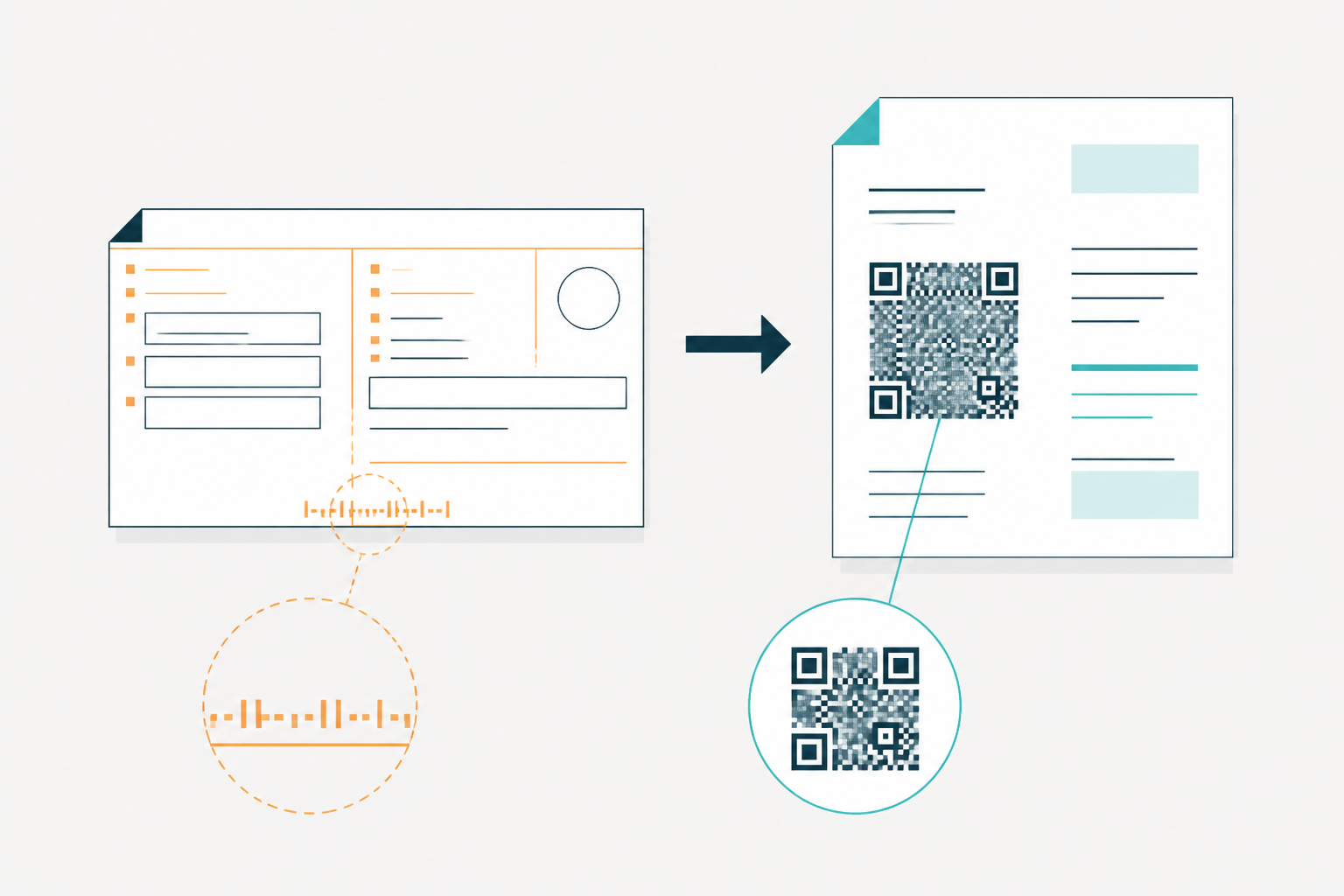
Unlike the old Einzahlungsscheine, the payable section of the QR-Rechnung contains all necessary information for both human readability and digital capture via banking apps or scanners. Compliance with SIX directives requires a precise layout in the lower part of the document. Here are the key details:
- Recipient Section (left, 62 mm width, 105 mm height): Displays the credit account, debtor details, currency, and the exact amount. It also serves as a receipt for over-the-counter payments.
- Payable Part (right, 148 mm width, 105 mm height): Contains the Swiss QR-code (46x46 mm) with the Swiss cross in the center, flanked by human-readable information.
- Separation Line: If sent by post, a perforation or a continuous line with a scissor symbol is required for a clean separation.
- Reference Type: The old PVR number has been replaced by a 27-digit QR-IBAN reference or an international Creditor Reference (ISO 11649).
A practical advantage over the past is flexibility regarding the amount. While manual amount corrections were not permitted on the old orange Einzahlungsscheine, the new standard allows payable parts to be generated without a fixed amount. This enables the customer to freely indicate the sum due, for example, for down payments or donations. However, in your daily business, the rule remains to indicate the exact balance in CHF with two decimal places.
Mandatory Invoice Information and New VAT Rates
The QR-Rechnung simplifies payment but does not replace the formal requirements of the Swiss Federal Direct Tax Act (DTA, Art. 26). When you issue an invoice for a repair or supply, the text must contain clear administrative details to be fiscally valid. This includes your full business name, company address, and your identification number (ID/UID) with the designation 'VAT'. Since January 1, 2024, new VAT rates have been in effect: 8.1% for the standard rate, 3.8% for accommodation, and 2.6% for essential goods and groceries. Each applied rate must be clearly distinguished from the net amount.
A precise description of the services rendered, the period of execution, and complete customer contact details must be visible. If the data in the invoice header does not match the data encoded in the QR code, commercial customers might face issues with input tax deduction during a tax audit.
Automated Bank Reconciliation with camt.053 and camt.054
One of the fundamental reasons for moving from the old Einzahlungsschein to the QR-Rechnung is the introduction of international banking standards ISO 20022. The old text files (V11), used for downloading PVR credits, have been replaced by XML messages in camt format. Banks and PostFinance provide two main data streams: the camt.054 file, detailing individual credits in real-time or with daily updates, and the camt.053 file, representing the complete account statement.
By importing these files into your accounting software, incoming payments are automatically matched with the corresponding open invoice. This is facilitated by the QR reference number, allowing for efficient tracking and a significant reduction in manual processing time. For instance, if a client in Geneva pays an invoice, the camt.054 file will contain the transaction details, which your software can then use to mark the invoice as paid. This automation is a significant leap forward from manually checking bank statements against outstanding invoices.
Benefits for Swiss Artisans and SMEs
The transition to the QR-Rechnung offers several tangible benefits for your business. Firstly, it streamlines the invoicing and payment process, reducing administrative burdens and freeing up valuable time. Secondly, the enhanced accuracy minimises errors, preventing payment delays and potential disputes. The integration with camt files for bank reconciliation drastically cuts down on manual accounting work. Furthermore, the modern format supports digital processes, improving your business's overall efficiency and professional image. For a small business, this efficiency can directly translate into better cash flow and the ability to focus more on core operations rather than administrative tasks.
Consider the example of a small construction company near Zurich. Before the QR-Rechnung, they spent hours each week manually reconciling payments. Now, with a system that generates QR-Rechnungen and automatically imports camt files, that time is reduced to minutes. This reclaimed time can be reinvested in client acquisition or project management, directly contributing to business growth. This shift is not just about compliance; it's about embracing a more efficient way of doing business in Switzerland.
FAQ
- Is the old Einzahlungsschein still usable after September 30, 2022?
- No, the Einzahlungsschein (both orange and red) was officially phased out on September 30, 2022. All Swiss businesses must now use the QR-Rechnung for invoicing.
- What are the new Swiss VAT rates?
- As of January 1, 2024, the standard VAT rate is 8.1%. Reduced rates apply for accommodation (3.8%) and essential goods/groceries (2.6%). These must be clearly indicated on your invoices.
- How does the QR-Rechnung improve bank reconciliation?
- The QR-Rechnung uses standardized camt.053 and camt.054 files. These XML formats allow accounting software to automatically match incoming payments with open invoices based on the QR reference number, significantly reducing manual effort.
- Do I need special software to create QR-Rechnungen?
- While you can create simple QR-Rechnungen manually, using specialized software designed for Swiss businesses is highly recommended. Such tools ensure compliance with all technical requirements and integrate seamlessly with accounting and banking processes.
Related articles
- From Einzahlungsschein to QR-Rechnung: What Changed in SwitzerlandUnderstand the Swiss transition from Einzahlungsschein to QR-Rechnung. Learn about requirements, VAT, payments, and benefits for Swiss SMEs.
- CAMT 054 Reconciliation: Your Swiss Business GuideMaster CAMT 054 reconciliation for Swiss businesses. Streamline payment processing and save valuable time with automation.
- QR-IBAN and QR reference: get Swiss invoice payments rightLearn how QR-IBAN and the 27-digit QR reference work together. Avoid mismatched payment details and make Swiss invoice reconciliation easier.
- Swiss QR-bill errors: fix IBAN, addresses and printingAvoid rejected QR payments: check your IBAN and reference type, address details and PDF print settings. A practical checklist for Swiss small businesses.